

In a world buzzing with AI hype, here's how we turned it into real results at Synctivate.
At Synctivate, we're all about streamlining business processes through custom software solutions. As a team that's deeply embedded in building systems like CRMs, inventory management, project tracking, billing, and invoicing for our clients, we know firsthand the pain of operational inefficiencies. That's why we created SynCronus, our internal AI-powered bot that handles timesheet logging and more - all without ever leaving the tools where our team already spends their day, like Slack. In this post, we'll share how SynCronus solved a nagging problem for us, what it does, the impact it's had, and most importantly, how this approach could supercharge your business operations, whether you're using Slack or Microsoft Teams. (Note: Our CRM is a custom application we developed in Quickbase, and SynCronus interacts directly with it - but we can adapt similar bots to work with any CRM on the market.)
The Problem We Solved
Like many growing companies, we struggled with employees not submitting timesheets on time. It was a constant headache - people would forget, put it off, or rush through it at the end of the week with skimpy details. Our existing process meant stepping away from daily collaboration tools, logging into our CRM (our Quickbase-based system for project management and more), hunting for the right sections, selecting options from lists, and filling out forms. All that context switching added friction and led to errors.
Managers had no easy way to spot who was falling behind until it was too late, requiring manual checks. This directly affected our invoicing accuracy, project budgeting, and payroll - core elements that keep a business running smoothly. Inaccurate or delayed timesheets weren't just annoying; they created ripple effects on financials and client deliverables.
Why We Built It
We could have bought an off-the-shelf tool, but nothing quite fit. We wanted something that integrated seamlessly into our daily workflow, living right where our team collaborates all day. Our data - projects, tasks, employee records - is centralized in our CRM (built on Quickbase), and generic tools didn't connect natively.
Plus, we aimed for a natural, conversational interface rather than another rigid form. Employees could simply describe their work in plain language, like "I spent 5 hours on the inventory management system for Generic Corp, under the project scoping phase," and have it handled intelligently. Building SynCronus also let us test-drive AI capabilities ourselves, refining patterns we can adapt for clients facing similar bottlenecks.
What SynCronus Does
SynCronus is designed to make logging and managing time effortless, with smart features that keep things accurate and proactive. Here's how it works:
Natural Conversation for Logging Time: Employees message the bot directly with something casual like "I worked 5 hours today on the billing integration for Sample Industries, with the scope of application structuring." It understands the details, asks simple follow-ups if needed (like clarifying the date or task), prompts for additional information to ensure completeness, and even suggests improvements to craft clearer, more detailed descriptions. This not only captures exactly what was done but reduces confusion on client invoices by providing richer context. Finally, it presents a clear summary for approval. One click, and it's submitted straight into our CRM - no more switching apps.
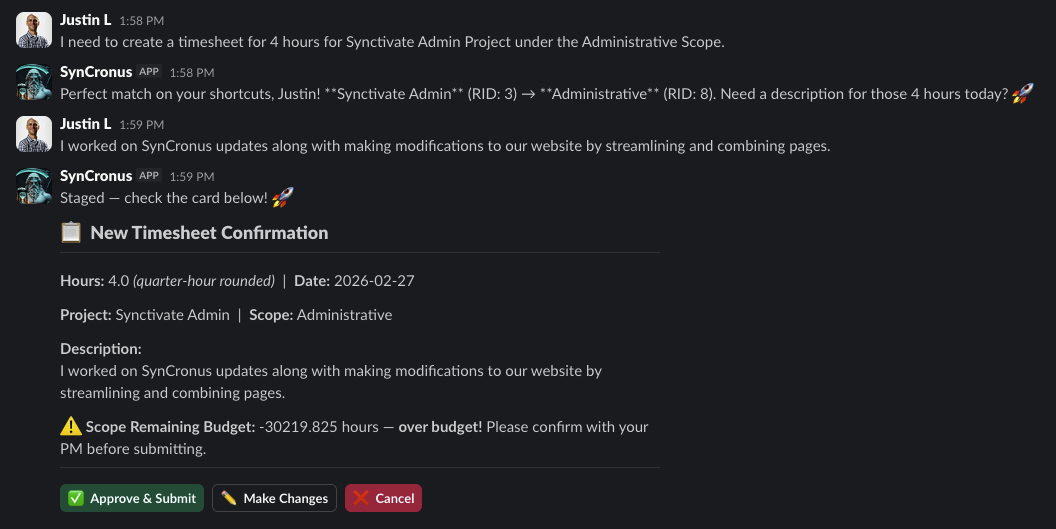 Entering a timesheet through SynCronus in Slack
Smart Matching for Efficiency: Over time, the bot remembers common patterns, like frequently used projects or tasks. If you say "log 3 hours on CRM enhancements for Demo Co," it pulls from your habits to suggest the right match, saving even more time.
View and Edit Past Entries: Need a quick recap? Ask "what did I log last week?" and get a breakdown by day, including projects, hours, descriptions, and status. For changes, say "edit my entry from Thursday on the invoicing module for Example Firm" - it finds it, confirms, and updates, but locks anything already invoiced to maintain accuracy.
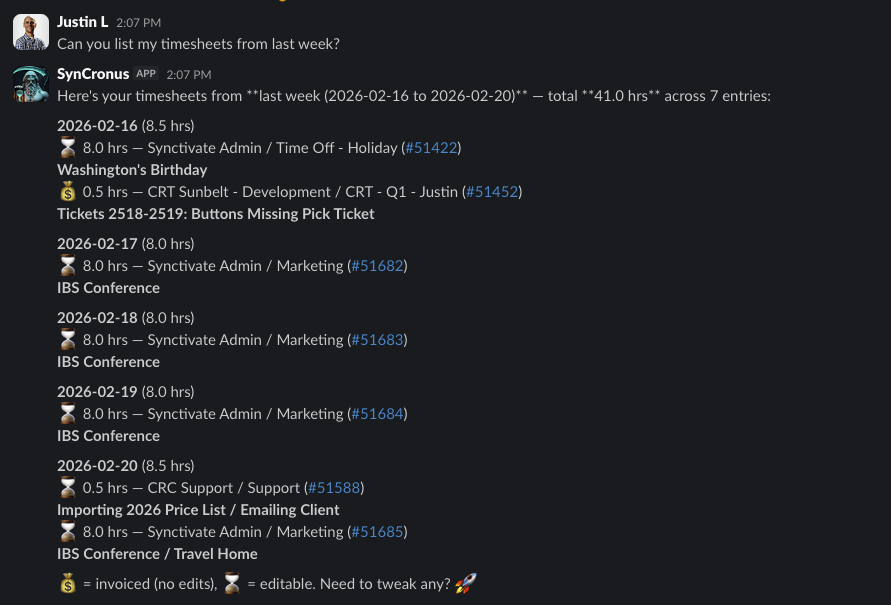 Asking SynCronus for a weekly timesheet report
Automated Reminders with Accountability: Every weekday afternoon, the bot sends a friendly nudge to the team channel, highlighting anyone who hasn't logged enough hours for the day or week. It keeps the tone light and fun, without feeling like a chore, and mentions specific people to encourage quick catch-ups.
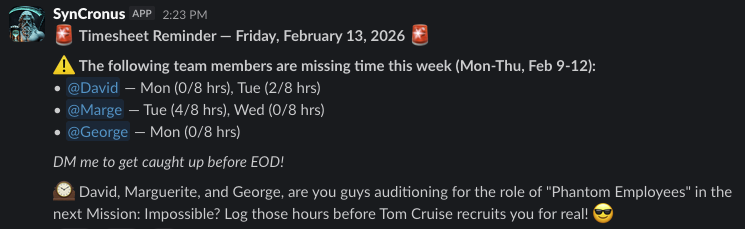 SynCronus daily reminder nudging the team to log hours
Budget Awareness and Rounding: When confirming an entry, it shows remaining budgeted hours for the task and flags if it's running low. Hours are rounded to standard quarter-intervals for billing fairness, with a quick check if adjustments are made.
These features turned a tedious task into something seamless, all handled in the background while our team stays focused.
The Impact on Our Team
The results have been game-changing. Timesheet compliance skyrocketed - submissions now happen in about 30 seconds, right in the flow of work. The reminders create gentle accountability, reducing managerial follow-ups. By enforcing more detailed entries and helping refine descriptions, we've gained better internal visibility into daily work and minimized invoice disputes with clients. We've caught budget issues early, avoiding surprises during invoicing, and overall, our team spends less time on admin and more on high-value work like building custom systems for clients.
In numbers we've seen internally (though every business is different), this has cut down on late submissions by over 80%, improved data accuracy, and freed up hours weekly for creative problem-solving. Imagine applying similar AI automations to your operations - potentially reducing costs by 20-40% through streamlined workflows and turning saved time into billable opportunities or innovation.
How This Could Help Your Company
SynCronus isn't just about timesheets - it's a blueprint for using AI to tackle everyday business friction without disrupting your workflow. For us, it proved how AI can bridge tools like Slack with core systems like our Quickbase CRM, but the same principles apply to Microsoft Teams or other platforms and any CRM you might use. Unlike generic AI tools, our bots are fully customized to your existing systems, scaling from simple reminders to complex workflows like multi-step approvals or predictive analytics. Imagine empowering your team to handle key tasks conversationally, right where they collaborate, leading to real savings and revenue gains.
Beyond time tracking, think about common challenges small to mid-sized companies face. Here are some scenario ideas where a similar AI bot could automate and streamline:
Handling Inbound Leads Efficiently: Picture an email landing in your company inbox from a potential client inquiring about services. The bot could notify the sales team in Slack or Teams, automatically create a new record in your CRM with the contact details, send a personalized intro email with your company's overview, and even suggest available meeting slots to schedule a call - all based on a quick approval from the team. This could shave hours off lead response time, boosting conversion rates and potentially adding thousands in new revenue per month by closing deals faster.
Streamlining Inventory Management: For a retail or manufacturing business, if stock levels dip below a threshold in your inventory system, the bot alerts the operations manager in Teams with details like "Item X is at 20 units - reorder now?" It could then generate a purchase order draft, check supplier pricing from your database, and flag it for review. This prevents stockouts, reduces emergency ordering costs (saving 10-20% on rush fees), and keeps cash flow steady.
Automating Billing and Invoicing: Suppose a project milestone is completed in your project management tool. The bot could ping the finance lead in Slack, pull hours and expenses, create an invoice draft, and send it to the client with a payment link. If there's a discrepancy, it asks for clarification. This accelerates cash inflows, minimizes errors that lead to disputes, and could improve your accounts receivable turnaround by weeks - directly impacting profitability.
Managing Project Updates and Approvals: In a construction or service firm, team members could message the bot "Update on Project Y: Phase 2 complete, but we need approval for extra materials." It notifies the project manager in Teams, attaches relevant docs from your system, tracks the approval, and updates the CRM or billing records. This cuts down on email chains, reduces delays (saving on labor costs), and ensures nothing falls through the cracks.
Employee Onboarding and HR Tasks: For growing teams, a new hire starts: The bot could welcome them in Slack, assign initial tasks from your HR system, set up access requests, and schedule check-in meetings. It might even pull from your knowledge base to answer common questions like "How do I submit expenses?" This speeds onboarding, reduces HR admin time by 50%, and helps retain talent by making the experience smooth.
Filling Out Tedious Contracts: Imagine your sales or legal team dreading lengthy contract forms. The bot, integrated with Teams, could guide them through it conversationally - asking targeted questions, pulling in details from client documents, emails, or even uploaded pictures of workflows. With human approval at key steps, it populates the contract in your system, potentially cutting customer close time by 50% or more and unlocking significant revenue growth through faster deals.
Capturing Insights from Emails: Emails often trap valuable info that never makes it to your CRM or project tools. An AI bot could monitor email chains (with proper permissions), extract key details like client requests or decisions, log them automatically into your system, and notify the team in Slack or Teams. This builds a richer data foundation for better decision-making, streamlines processes by reducing manual entry, and uncovers missed opportunities hidden in inboxes.
These examples show how AI like SynCronus can save money by automating repetitive work (think reduced labor hours and fewer errors) and generate revenue through faster processes (like quicker leads or invoicing). It's not about replacing people - it's about giving them superpowers to focus on what matters.
Ready to ditch manual drudgery and unlock AI-driven growth? At Synctivate, we've seen the difference firsthand, and we're excited to bring that to your business. Visit our AI page today for a free consultation and let's build your custom AI agent to start saving time (and money) or generating more revenue tomorrow.
What is your biggest operational pain point? We would love to talk to you about how we can help you solve it.