
Escaping the freezing Virginia winter for the sunny warmth of Orlando felt like the perfect way to kick off our first-ever trip to the International Builders' Show (IBS) last week. The show is put on by the National Association of Home Builders (NAHB), and as members of NAHB and the Fredericksburg Home Builders Association (FABA), we were excited to finally experience it in person. Trading snow for sunshine was already a win, and then the real adventure began.
We landed excited to dive into the massive world of residential construction innovation. The Orange County Convention Center was buzzing with nearly 75,000 registrants filling the halls for IBS (part of Design & Construction Week, which drew close to 117,000 total). The exhibit space spanned 679,000 net square feet with 1,650 exhibitors showcasing the latest in building products, materials, and tech. (The scale is hard to describe until you're walking those endless aisles!)
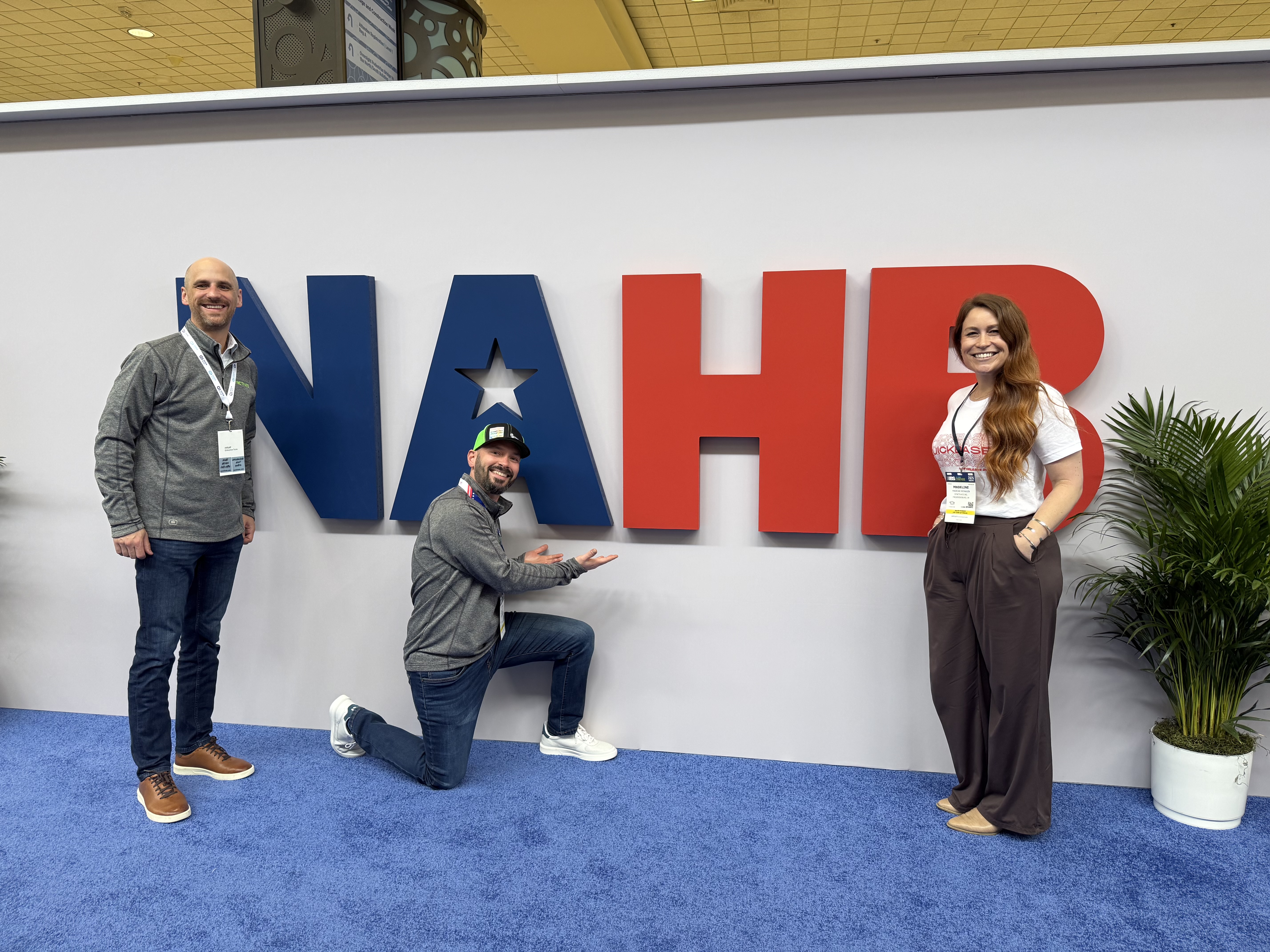
 Synctivate team in Orlando at IBS 2026
Our main goal wasn't hunting for new clients, though that would have been a nice bonus. Instead, we went to listen, learn, and spot ways Synctivate can better serve our existing construction and home-building customers. We're all about custom software, process automation, Quickbase and Airtable solutions that streamline operations, so we wanted to see where the industry is heading with advancements in materials, AI, tools, and workflows, and identify any real gaps we could help fill.
A few lessons hit home hard:
AI in Construction Is Still Very Much in Its Early Days
First, AI in construction is still very much in its early days. The brand-new AI & Tech Studio was a highlight, packed with hands-on demos, builder-led case studies, and practical sessions on AI for design, project management, sales, CRMs, estimating, BIM/3D modeling, virtual tours, and more. But the education sessions we attended kept things pretty foundational: basics like using AI to analyze data, communicate with clients, organize documents, and handle simple tasks. It's clear the industry is hungry for practical AI applications, but we're not yet at the advanced, transformative stage many expect. That means huge opportunity ahead for builders ready to adopt thoughtfully, and for partners like us building tailored tools that actually solve daily pain points without the hype.
CRM Challenges Persist
Second, even with all the specialized software out there, CRM challenges persist for many builders and remodelers. Reporting, client communication, and keeping everything organized remain big hurdles. Sessions reinforced that fragmented tools lead to lost time, miscommunications, and frustrated teams. It's a reminder that off-the-shelf solutions often fall short. Custom integrations and streamlined workflows (exactly what Synctivate specializes in) can make a real difference in turning data into actionable insights and stronger client relationships.
This actually tied directly to a conversation I jumped into on the NAHB forums just before heading to IBS. Someone posted asking, "Wondering what Accounting software builders use who have a volume of 50M-100M? We currently use quick books and wonder if that is still the best option?" I responded that many trades businesses we work with still run QuickBooks as the core accounting engine, especially those who like its familiarity and lower cost. From what I've seen (and experienced at Intuit back in the day when I used to work there), it works fine when you augment it properly. The trick is not overloading QB with construction ops - let it stick to GL, AP/AR, payroll, financials. Pair it with a solid front-end system for job costing, project tracking, time cards, assets, inventory, vendor POs, incurred costs, materials, custom invoices, etc. That data flows into QB via integration for clean backend accounting. I run Synctivate, a custom software team that specializes in construction and trades. A bunch of our customers (various sizes, including some in that volume) do exactly this, keeps things efficient without a full rip-and-replace. If QB is handling your financials okay now, augmenting it is often the smartest, lowest-risk move. Happy to chat more if you want specifics on integrations or what we've seen work well. Looking forward to the IBS Conference this week! The response got positive feedback from the community, and it really reinforced the IBS sessions: many builders are augmenting existing tools like QuickBooks rather than replacing them entirely, creating real opportunities for custom integrations and targeted solutions.
Buying Back Your Time
A couple of sessions really stood out. One was the scaling-focused Building Knowledge session with speakers including Tyler Farrell of Killowen Construction, Brad Robinson of Bradford Custom Homes & Remodeling, and Joe Christensen of Cardinal Crest Homes (moderated by Buildertrend's Dan Houghton). They dove into signs you're ready to scale, steps to get there, assessing team strength, timing hires, and building advisory networks. Most importantly, they emphasized buying back your time by putting the right people in the right roles so you stop wearing every hat. Those principles aren't just for builders; they translate directly to any growing business, including ours at Synctivate. It was a powerful nudge to keep focusing on delegation, systems, and letting tech handle the repetitive stuff so owners and teams can focus on what matters.
Jon Taffer & Gene Myers: Building Competitive Advantage
Another highlight was the high-energy Jon Taffer & Gene Myers: Building Competitive Advantage super session. Jon (from Bar Rescue) and Gene (of Thrive Home Builders) delivered sharp, no-nonsense insights on finding your ideal customer and selling the emotional "reaction" behind a build. Their energy and real-world stories made it one of the most memorable moments of the show.
Logistically, a quick tip for next time: staying 19 miles away sounded reasonable until we hit Orlando traffic (Disney crowds plus event rush equaled nearly 2-hour commutes each morning). We stuck mostly to the main exhibit building for education sessions, which worked out well, but lesson learned: closer is better!
On the family side, it was a blast bringing my wife and two kids along. While I was in sessions, they soaked up the pools and hit Discovery Cove. We all made time for Legoland as a family, and it did not disappoint. Highly recommend if you're ever in the area with little ones.
 Legoland with the family
IBS 2026 was energizing and eye-opening. It confirmed we're heading in the right direction at Synctivate: helping construction pros automate the chaos, integrate their tools, and scale without burning out. The industry is evolving fast, and we're excited to keep building solutions that close those gaps, whether it's smarter client portals, automated reporting, or AI-assisted workflows that actually fit real workflows.
Next year, the show moves to Las Vegas (Feb 2-4, 2027). As NAHB and FABA members, we plan to be there - if you're in residential construction, building, remodeling, or related fields, mark your calendar. It's worth it.
What about you? Attending IBS this year? What's one trend or takeaway you're excited about in the industry right now? I'd love to hear!
Thanks for reading, and here's to building smarter in 2026 and beyond.
Justin Lapier
CEO, Synctivate